
Coastal areas have increasingly turned into population growth hubs, as well as a nexus of climate change vulnerabilities. Studies worldwide have shown that almost half of the global population are now living around the coastal areas, which have a more rapid growth rate compared to other areas (Cosby et al., 2024). Practically, this exposed millions of people to the worst repercussions of climate change, starting from rising sea levels, floodings, as well as pressures on natural resources and public health.
At the same time, coastal area governance is still mostly driven by a technocratic approach, which tends not to take into account the lived experience of local people. Official knowledge and policies are oftentimes not aligned with the lived realities of coastal villages, which exacerbates risks of injustice instead (Acosta et al., 2025).
Responding to this issue, Rujak Center for Urban Studies and Universitas Harkat Negeri (UHN) in Central Java established the Center for Coastal Urban Studies (CCUS; or Pusat Kajian Perkotaan Pesisir). CCUS is a platform which works at the intersection of science, policy, and local people’s lived experience, to push for knowledge co-production activities, which could solve the challenges faced by coastal urban settings in a more just and sustainable manner. The center seeks to study coastal areas as more than just physical spaces, but also as sociopolitical arenas which will determine the future of our cities.
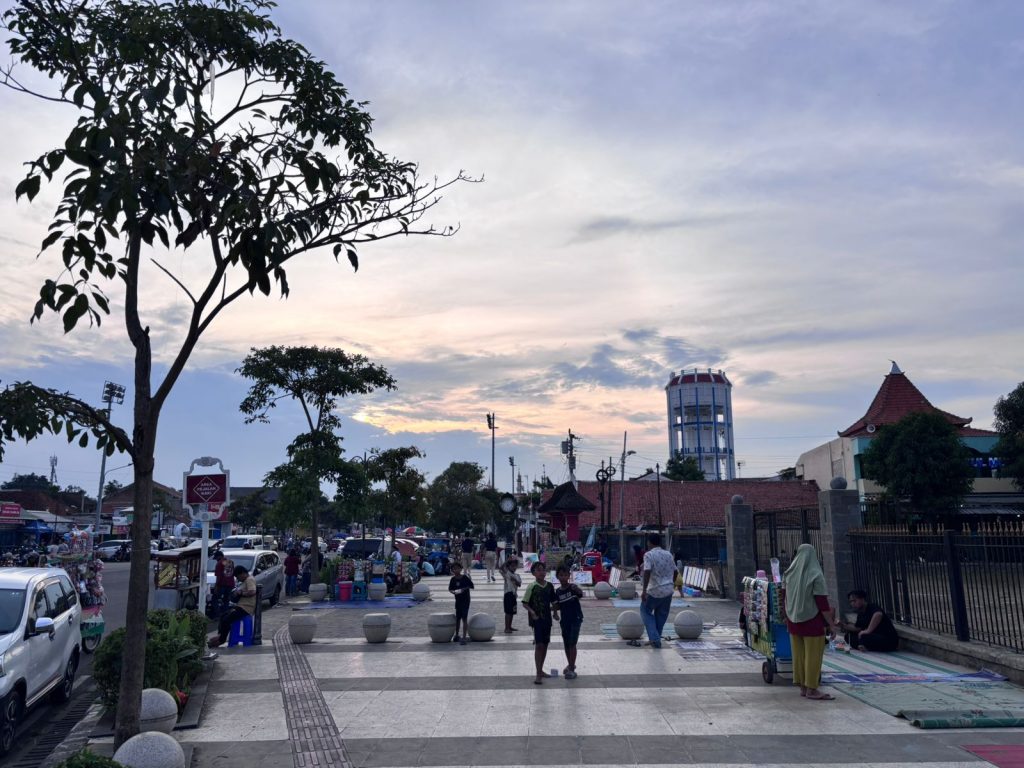
The center chose the city of Tegal, Central Java as its focus. The city is projected to turn into a hub for climate change policy studies and practices for secondary and coastal cities.
The National Development Planning Ministry (Bappenas) defines secondary cities as those with a population of between 100,000 to 1.5 million people (as opposed to big cities with a population of more than 1 million people; Greater Jakarta has a population of around 42 million). Bappenas also defines secondary cities as ones growing rapidly, serving as regional service hubs, and interregional economic nexus.
Climate-related challenges in Tegal
As a coastal city, Tegal has increasingly faced various climate-related risks, most prominently tidal flooding and extreme heat. According to data from the Meteorology, Climatology and Geophysics Agency, the city’s temperature has risen by 0.7 degrees Celcius in the last five years, impacting locals’ lives, housing and infrastructure. Unfortunately, the quality of buildings and environmental infrastructure in the city is still not adequate in responding to the most recent climate risks. For instance, most houses in the city do not have a proper air circulation system and do not apply passive cooling principles (which could be done through building orientation adjustment). Locals cope with rising temperatures by installing air conditioners, which exacerbates the urban heat island effect.
Another significant contributor to carbon emission in the city is its transportation sector. Tegal does not have an ample public transportation system so the majority of its residents choose to own private vehicles. Every three months, there are thousands of new motorbikes purchased by locals to support their mobility. At the same time, the lack of affordable housing in strategic locations causes the city’s residents to live further away from the city’s activity and service centers. This increases carbon emission and could potentially result in worse climate-related risks.
Amid limited fiscal and regional planning capacity, the Tegal city administration requires a more integrated and effective approach to development. A special emphasis needs to be placed on communities most vulnerable to the impacts of climate change: women, children, the elderly, disabled people and informal workers. These communities face greater risks related to extreme heat, coastal flooding, restricted mobility and substandard building quality. Therefore city development needs to focus on the attempts on bringing down emission while strengthening resilience and boosting residents’ quality of life through inclusive policies that are aligned with the Tegal city’s coastal contexts and fiscal capacity.
To achieve the goals mentioned above, the center supports knowledge-based policy development, city apparatus capacity building and inter-stakeholder collaboration to support the creation of mid-term development programs and policies that are more responsive to the climate risks while increasing Tegal city residents’ quality of life at the same time.
This program supports the city administration to strengthen its integration of climate issues in various aspects of its cross-sectoral regional planning and budgeting, including the Regional Mid-Term Development Plan, City Working Plan and the Regional Budget. This is important to ensure that the city development is more adaptive, integrated and sustainable, ensuring the protection of the most vulnerable segments of the population previously mentioned.
The study center kickstarted its program in early 2026 with workshops with UHN lecturers to gain knowledge on Tegal’s characteristics as a city.
Then these workshops were followed up by a series of studies seeking to map local challenges related to climate, mobility, housing and spatial planning. These studies comprise focus group discussions, interviews and questionnaire surveys involving the local city administration, which is going to be carried out until June 2028. The outputs of these assessments will include knowledge products like strategic notes, policy recommendations and learning materials that are relevant to local development needs, which should be finalized in March 2028.
These knowledge products will then serve as a basis for a strategic policy recommendation for the Tegal city administration, particularly in terms of dealing with climate risks.
The study center also seeks to boost the local government apparatus’ comprehension on integrating the climate change issue into regional planning and budgeting, as well as building a network of multi-stakeholder collaborations comprising the regional administration, higher education, research organizations, and other relevant parties. These outputs are expected to be attained at the end of June 2028. By that time, Tegal would also serve as a location for capacity strengthening activities on climate action and financing involving state civil apparatus, academics and community members.
